




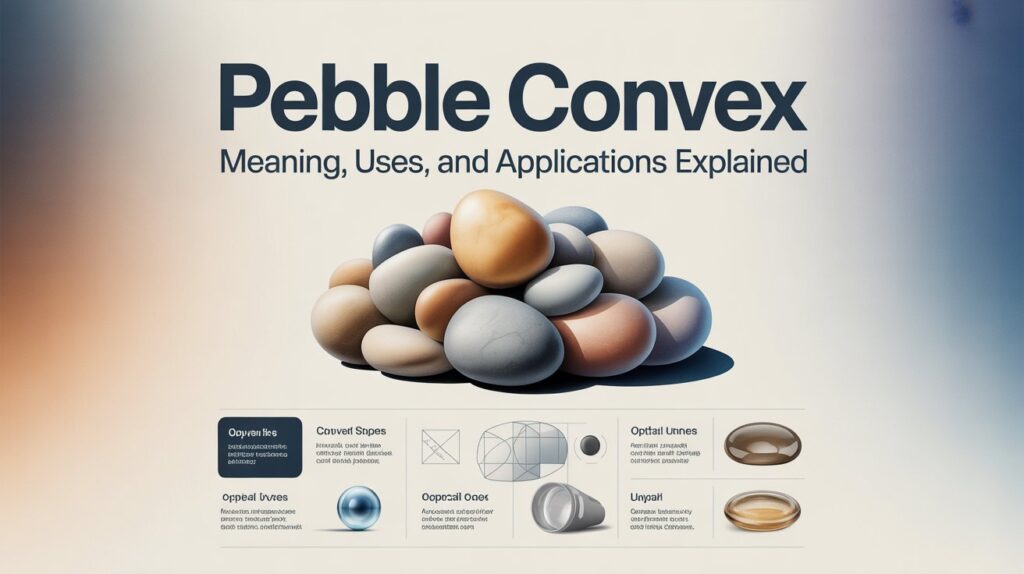
The term pebble convex may sound technical, but it combines two simple ideas: pebbles (small rounded stones) and convex shapes (surfaces that curve outward). Together, they describe naturally rounded stones or designs inspired by them.
Pebble convex forms are widely seen in nature, architecture, design, and geometry, making them both functional and aesthetically pleasing.
What Does Convex Mean?
- Pebble: A small, smooth stone shaped by water or natural forces
- Convex: A surface that curves outward, like the exterior of a sphere
So, pebble convex refers to:
A smooth, outward-curving shape similar to natural pebbles.
These shapes are soft, rounded, and free of sharp edges.
Characteristics of Convex Shapes
1. Smooth Surface
Pebbles are polished naturally, giving them a clean and refined look.
2. Outward Curvature
Convex shapes bulge outward, creating a soft 3D appearance.
3. Organic Design
No sharp lines—only natural curves.
4. Ergonomic Feel
Comfortable to touch and handle.
Convex in Geometry
In geometry, a convex shape means that any line drawn between two points inside the shape stays within it.
For example:
- Circles
- Spheres
- Oval shapes
Pebbles naturally resemble these convex forms due to erosion over time.
Uses of Convex Shapes
1. Interior Design
Pebble convex designs are used in:
- Wall textures
- Flooring patterns
- Bathroom decor
They create a calm, natural atmosphere.
2. Architecture
Architects use convex pebble shapes for:
- Modern building facades
- Landscape elements
- Pathways and gardens
3. Product Design
Many everyday objects use pebble convex shapes:
- Computer mice
- Soap bars
- Smart devices
These shapes improve comfort and usability.
4. Landscaping
Pebbles are commonly used in:
- Garden paths
- Water features
- Decorative stones
Convex shapes allow water to flow smoothly around them.
Benefits of Pebble Convex Design
Aesthetic Appeal
Soft curves are visually pleasing and modern.
Safety
No sharp edges make them safe for homes and public spaces.
Durability
Natural pebble shapes resist wear and tear.
Comfort
Ideal for handheld products and furniture.
Pebble Convex vs Flat Surfaces
| Feature | Convex | Flat Surface |
|---|---|---|
| Shape | Curved outward | Straight |
| Feel | Smooth & soft | Rigid |
| Design | Organic | Structured |
| Safety | High | Moderate |
Why Pebble Convex Shapes Are Popular
Modern design trends favor minimalism and natural aesthetics. Pebble convex shapes:
- Mimic nature
- Reduce visual stress
- Improve user experience
They are widely used in UI design, architecture, and product development.
Conclusion
Pebble convex is more than just a term—it represents a design philosophy rooted in nature. From geometry to architecture and product design, these smooth, outward-curving shapes offer both beauty and functionality.
As modern trends continue to embrace natural forms, pebble designs will remain a key element in creating comfortable and visually appealing environments.
Read More On Casa Blanca
FAQs
1. What is a convex?
A convex pebble is a smooth stone with an outward-curving surface.
2. Where are pebble convex shapes used?
They are used in design, architecture, landscaping, and everyday products.
3. Why are convex shapes important?
They improve safety, comfort, and aesthetics.