





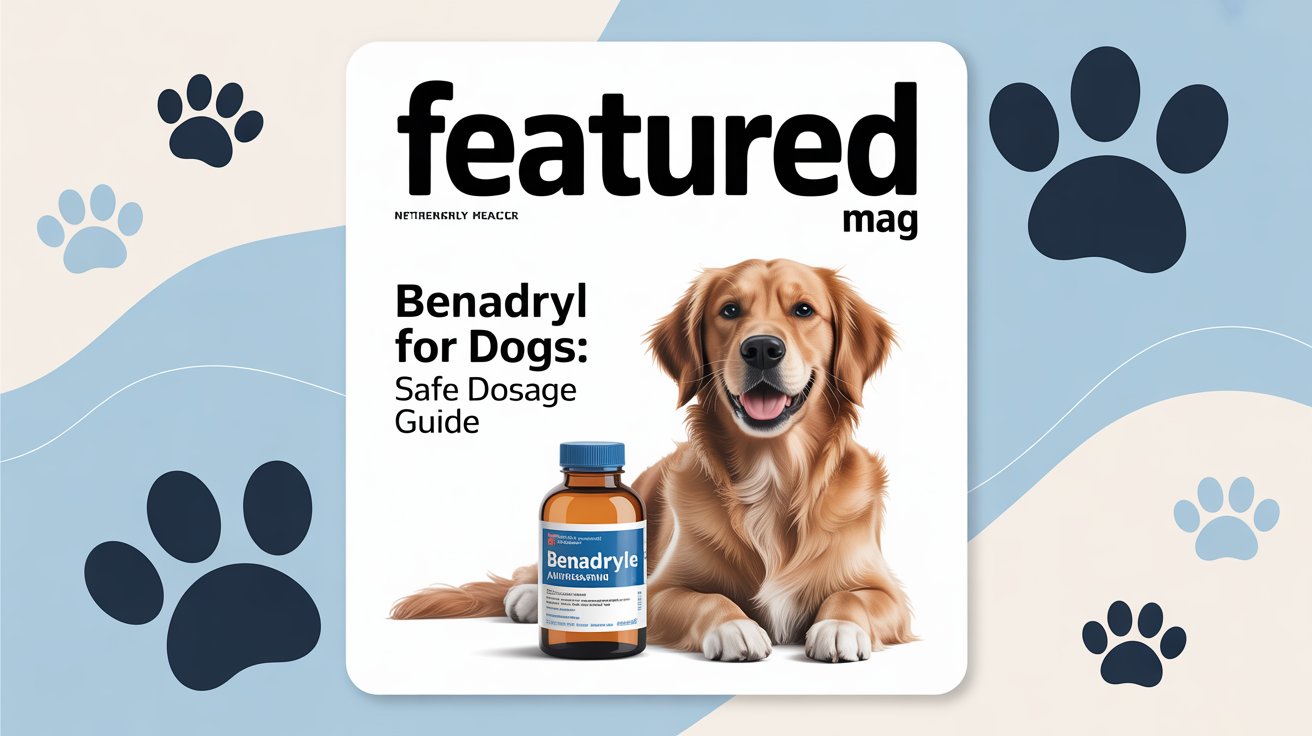
When your dog is dealing with allergies, itching, or anxiety, many pet owners consider using Benadryl for dogs as a quick remedy. But is it safe? How much should you give? This guide explains everything you need to know before giving Benadryl to your dog.
What Is Benadryl for dogs?
Benadryl is a common over-the-counter antihistamine containing diphenhydramine, used to treat allergies in humans. Veterinarians often recommend it for dogs as well, but only under proper guidance.
Uses of Benadryl for Dogs
Benadryl can help dogs with several conditions, including:
1. Allergies
Dogs can suffer from seasonal or environmental allergies. Benadryl helps reduce:
- Itching
- Sneezing
- Runny nose
- Skin irritation
2. Insect Bites & Stings
It can reduce swelling and discomfort caused by bee stings or insect bites.
3. Motion Sickness
Benadryl may help calm nausea and vomiting during travel.
4. Anxiety & Mild Sedation
Some dogs become relaxed or sleepy after taking Benadryl, making it useful for:
- Fireworks anxiety
- Travel stress
Recommended Dosage for Dogs
The typical dosage is:
👉 1 mg per pound (2 mg per kg) of body weight, given 2–3 times daily
Example:
- A 25-pound dog → 25 mg dose
⚠️ Always consult a veterinarian before giving your dog any medication.
Is Benadryl Safe for Dogs?
Yes, Benadryl is generally safe for dogs when used correctly. However, it’s important to:
- Use plain Benadryl only (avoid formulas with added ingredients like decongestants)
- Follow proper dosage guidelines
- Monitor your dog for any adverse reactions
Possible Side Effects
While most dogs tolerate Benadryl well, some may experience:
- Drowsiness (most common)
- Dry mouth
- Urinary retention
- Increased heart rate
- Upset stomach
In rare cases, dogs may show hyperactivity instead of sedation.
When NOT to Use Benadryl
Avoid giving Benadryl if your dog has:
- Glaucoma
- High blood pressure
- Cardiovascular disease
- Thyroid disorders
Also, it may interact with other medications, so always check with your vet.
Signs of Overdose
Too much Benadryl can be dangerous. Watch for:
- Severe lethargy
- Agitation
- Rapid heartbeat
- Seizures
If you suspect an overdose, contact a veterinarian immediately.
Tips for Giving Benadryl for Dogs
- Use tablets or capsules for accurate dosing
- Hide the pill in food or treats
- Avoid liquid forms with alcohol or xylitol
Final Thoughts
Benadryl for dogs can be a helpful, affordable solution for treating mild allergies and anxiety in dogs. However, it’s not a one-size-fits-all remedy. Always consult your veterinarian to ensure safety and proper dosage for your pet.
Read More on Casa Blanca