



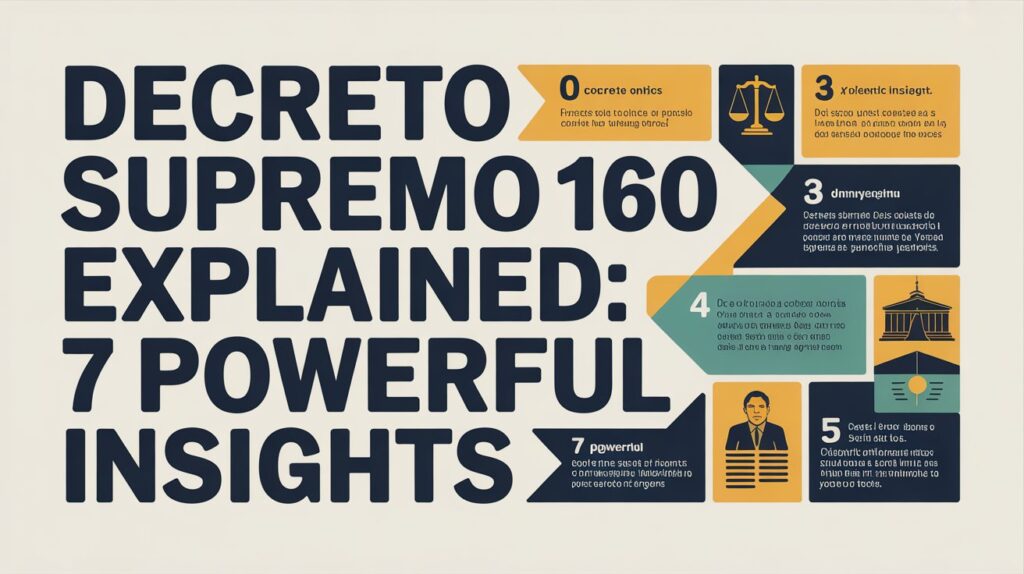
Decreto Supremo 160 is a significant regulatory framework that plays a crucial role in governing specific administrative, legal, or technical aspects within a country—most notably associated with Chile. This decree has gained attention due to its influence on industries, compliance requirements, and institutional operations.
What is “Decreto Supremo 160”?
“Decreto Supremo 160” is a legal decree issued by a governmental authority, typically under executive power. In the context of Government of Chile, such decrees are used to regulate laws, enforce policies, and establish standards.
Key Definition
- A “Decreto Supremo” is a binding regulation signed by a president or minister
- It provides detailed instructions for implementing laws
- It carries legal authority across relevant sectors
Purpose of Decreto Supremo 160
The main purpose of Decreto Supremo 160 is to ensure proper regulation and compliance in its designated area.
Core Objectives
- Standardization of procedures
- Legal clarity for organizations
- Protection of public and institutional interests
- Implementation of broader legislative frameworks
Depending on its specific application, it may address areas like:
- Environmental regulations
- Technical standards
- Public safety
- Administrative compliance
Key Features of Decreto Supremo 160
1. Legal Authority
Decreto Supremo 160 carries full legal weight, meaning organizations must comply or face penalties.
2. Sector-Specific Application
It often applies to specific industries, ensuring that regulations are tailored and effective.
3. Mandatory Compliance
Failure to follow the decree can lead to:
- Fines
- Legal actions
- Operational restrictions
Why “Decreto Supremo 160” is Important
The importance of “Decreto Supremo 160” lies in its ability to bridge the gap between law and execution.
Major Benefits
- Ensures consistency in regulation
- Promotes transparency
- Enhances accountability
- Protects public welfare
For businesses, it provides clear guidelines, reducing ambiguity in operations.
Challenges and Criticism
Despite its benefits, Decreto Supremo 160 is not without criticism.
Common Concerns
- “Complex compliance requirements” can burden smaller organizations
- Frequent updates may cause confusion
- Lack of awareness among stakeholders
These challenges highlight the need for better communication and implementation strategies.
How It Affects Businesses and Individuals
For Businesses
- Must adapt operations to meet legal standards
- Need for documentation and reporting
- Possible increase in operational costs
For Individuals
- Greater protection and safety
- Clearer rights and obligations
Practical Example
In regulatory frameworks like those seen in Latin America, decrees such as Decreto Supremo 160 often govern:
- Workplace safety
- Environmental protection
- Technical compliance
This ensures that both public and private sectors operate responsibly.
Conclusion
“Supremo 160” stands as a powerful legal tool that ensures structured governance and effective implementation of laws. While it brings clarity and protection, it also introduces complexity and compliance challenges.
Understanding this decree is essential for:
- Businesses aiming for compliance
- Individuals seeking awareness
- Professionals navigating legal frameworks
In today’s regulatory landscape, staying informed about “Supremo 160” is not just beneficial—it is “absolutely essential”.
Read More On Casa Blanca