




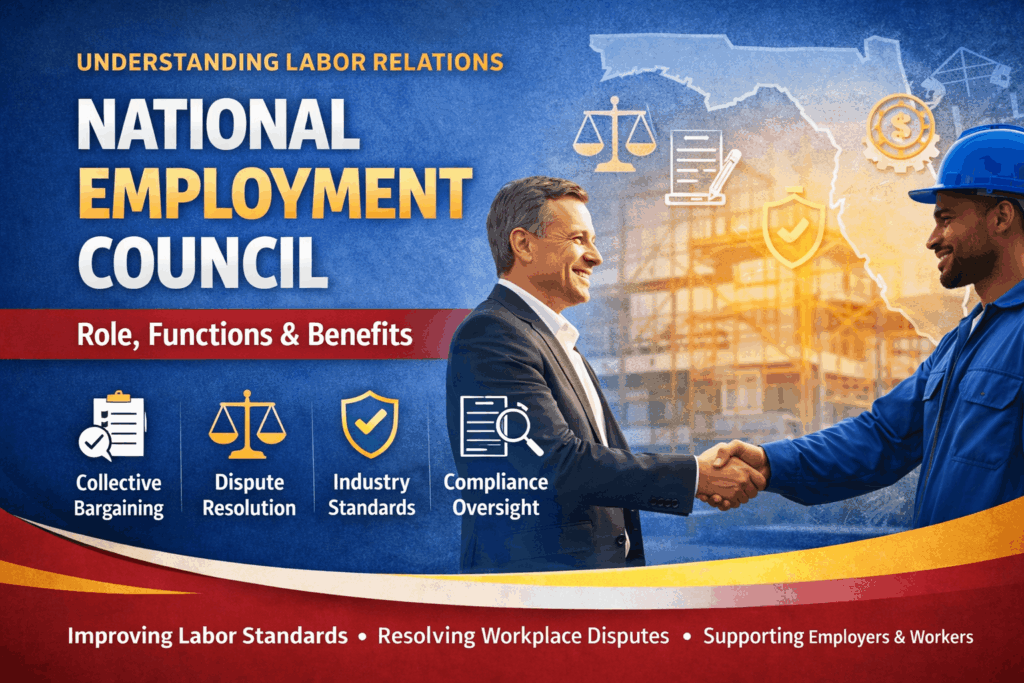
A National Employment Council (NEC) is a structured labor relations body that brings together employers and employees to regulate working conditions within specific industries. These councils play a vital role in shaping fair employment practices, wage standards, and dispute resolution systems.
Typically established under labor laws, NECs operate as collaborative platforms where employers’ associations and trade unions negotiate agreements that govern workplace policies.
Mission and Purpose
The core mission of a National Employment Council is to promote industrial harmony by ensuring balanced relationships between employers and employees. These councils aim to:
- Establish fair wage structures
- Define working hours and employment conditions
- Provide dispute resolution mechanisms
- Promote compliance with labor laws
- Encourage cooperation between stakeholders
By fostering dialogue and negotiation, NECs reduce workplace conflicts and improve productivity.
Organizational Structure
A typical National Employment Council operates through a well-defined governance framework, including:
Governing Board
The governing board consists of representatives from employer associations and trade unions. This board is responsible for decision-making, policy approval, and overall direction.
Secretariat
The secretariat handles administrative tasks, including communication, record-keeping, and coordination of council activities.
Committees
Specialized committees may be formed to focus on areas such as:
- Wage negotiations
- Compliance monitoring
- Dispute resolution
- Training and development
Key Functions of National Employment Council
1. Collective Bargaining
NECs facilitate collective bargaining agreements (CBAs), ensuring fair wages and working conditions for employees across industries.
2. Dispute Resolution
They provide mechanisms to resolve labor disputes efficiently, reducing reliance on courts and lengthy legal processes.
3. Setting Industry Standards
NECs define minimum standards for:
- Salaries
- Benefits
- Working hours
- Safety conditions
4. Compliance and Enforcement
They ensure that both employers and employees adhere to agreed labor regulations.
Programs and Services
Many National Employment Councils offer a variety of services, including:
- Training and capacity-building programs
- Awareness campaigns on labor rights
- Advisory services for employers and employees
- Certification and compliance audits
These programs strengthen workplace relationships and promote legal awareness.
Financial Structure
The funding model of a National Employment Council typically includes:
- Membership fees from employers and employees
- Government support (in some cases)
- Service charges for training and compliance services
This financial model ensures sustainability and operational efficiency.
Impact on Employment and Economy
The role of NECs extends beyond individual workplaces. Their broader impact includes:
- Improved labor standards across industries
- Reduced industrial disputes
- Enhanced economic productivity
- Increased worker satisfaction and retention
By maintaining a stable labor environment, NECs contribute significantly to national economic growth.
Challenges Faced by National Employment Councils
Despite their importance, NECs face several challenges:
- Limited awareness among stakeholders
- Compliance issues in informal sectors
- Financial constraints
- Evolving labor market dynamics
Addressing these challenges is crucial for maximizing their effectiveness.
Why National Employment Councils Matter
A National Employment Council is essential for maintaining fairness in the workplace. It ensures that both employers and employees have a voice in shaping labor policies, creating a balanced and transparent system.
In today’s rapidly changing work environment, NECs provide stability, protect worker rights, and support sustainable business practices.
Conclusion
The National Employment Council plays a critical role in modern labor systems by bridging the gap between employers and employees. Through collective bargaining, dispute resolution, and policy enforcement, these councils help create a fair and productive work environment.
As industries continue to evolve, NECs remain a cornerstone of labor governance, ensuring that economic growth goes hand in hand with employee welfare.