



How To Plan a wedding Timeline. Wedding involves many moving parts, and one of the most important elements is creating a well-organized wedding timeline. A clear schedule ensures that everything runs smoothly, from the morning preparations to the final dance at the reception. When couples know how to plan a wedding timeline, they can reduce stress and enjoy every special moment of their big day.
This guide explains step-by-step how to create a wedding timeline that keeps the day organized, memorable, and enjoyable for everyone involved.
Why a Wedding Timeline Is Important
A wedding timeline acts as the roadmap for the entire event. It helps coordinate vendors, the wedding party, and guests so that every activity happens at the right time.
Without a timeline, important moments such as photography sessions, the ceremony, and the reception could become rushed or delayed. A well-planned schedule ensures that the day flows naturally and that the couple can focus on celebrating their love.
Start Planning the Timeline Early
How to plan a wedding timeline? One of the first steps in planning a wedding timeline is starting early. Couples should begin outlining their schedule several months before the wedding date.
Work with your wedding planner, venue coordinator, and vendors to determine how much time each part of the day requires. Early planning allows you to adjust the schedule if needed and ensures that everyone involved understands their role.
Plan the Getting Ready Schedule
The wedding day usually begins with the bride, groom, and wedding party getting ready. Hair, makeup, and dressing often take several hours, so it is important to allow enough time.
Many couples schedule professional hair and makeup artists who need a clear timeline to prepare everyone. Starting early in the morning helps prevent delays later in the day.
Schedule the Photography Sessions
Photography plays a big role in capturing wedding memories. When planning your wedding timeline, make sure to allocate time for important photo sessions.
Common photography moments include:
- Getting ready photos
- First look between the couple
- Wedding party photos
- Family portraits
- Ceremony photos
- Reception highlights
A professional photographer can help estimate how long each session will take.
Plan the Ceremony Timing
How to plan a wedding timeline? The ceremony is the most important part of the wedding day. Most ceremonies last between 20 and 40 minutes, depending on cultural traditions or religious customs.
When creating your timeline, include time for guests to arrive and be seated before the ceremony begins. It is also helpful to allow a short buffer period in case of minor delays.
Organize the Reception Schedule
After the ceremony, the reception begins. A typical reception timeline may include the following events:
- Guest arrival and cocktail hour
- Grand entrance of the couple
- First dance
- Dinner service
- Toasts and speeches
- Cake cutting
- Open dancing and entertainment
Planning these activities carefully ensures the reception feels balanced and enjoyable.
Include Travel and Transition Time
How to plan a wedding timeline? If your ceremony and reception are at different locations, remember to include travel time in the wedding timeline. Guests, vendors, and the wedding party may need time to move between venues.
Adding small buffer periods between activities can help prevent the schedule from becoming too tight.
Share the Timeline With Vendors and the Wedding Party
How to plan a wedding timeline? Once the timeline is finalized, share it with everyone involved in the wedding. This includes photographers, caterers, DJs, planners, and the wedding party.
When everyone understands the schedule, coordination becomes much easier, and the day runs more smoothly.
How to Plan a Wedding Timeline
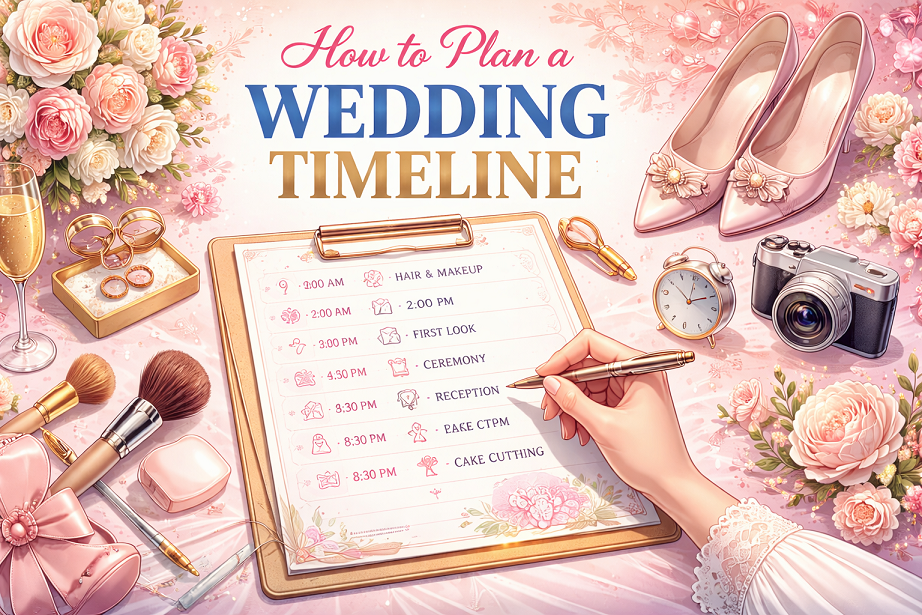
Here is a simple example of a wedding day timeline:
- 9:00 AM – Hair and makeup begin
- 12:00 PM – Getting ready photos
- 2:00 PM – First look and couple photos
- 4:00 PM – Guests arrive for ceremony
- 4:30 PM – Wedding ceremony
- 5:00 PM – Cocktail hour
- 6:30 PM – Reception begins
- 7:00 PM – Dinner and speeches
- 8:30 PM – Cake cutting and dancing
- 10:30 PM – Final send-off
This timeline can be adjusted depending on the style and size of the wedding.
Tips for a Smooth Wedding Day
To ensure your wedding timeline works well, keep these tips in mind:
- Add buffer time between major events
- Work closely with vendors and planners
- Avoid scheduling too many activities back-to-back
- Stay flexible in case of small delays
Most importantly, remember that the wedding day is about celebrating love and creating joyful memories.
Conclusion
Learning how to plan a wedding timeline is an essential step in organizing a successful wedding. A well-structured schedule helps coordinate every detail, from morning preparations to the final celebration.
By planning early, working with vendors, and allowing enough time for each activity, couples can create a stress-free wedding day that flows beautifully and allows them to enjoy every moment.