



In today’s digital world, consistency is everything. Whether you’re managing an eCommerce store, a database, or SEO content, brand name normalization rules help ensure that brand names are written in a consistent, accurate, and standardized way across all platforms.
This guide explains what brand name normalization is, why it matters, and how to apply effective rules.
What Is Brand Name Normalization?
Brand name normalization rules is the process of standardizing how brand names are written, stored, and displayed across systems. It removes variations, inconsistencies, and formatting issues to create a single, uniform version of each brand name.
Example:
- “nike” → “Nike”
- “APPLE Inc.” → “Apple”
- “samsung electronics” → “Samsung”
Why Brand Name Normalization Rules Is Important
1. Improves Data Consistency
When brand names are standardized, your data becomes cleaner and easier to manage.
2. Enhances SEO Performance
Search engines prefer consistent naming, which improves rankings and avoids duplicate content issues.
3. Better User Experience
Customers can easily recognize and trust properly formatted brand names.
4. Accurate Analytics
Normalized data ensures better reporting, filtering, and decision-making.
Core Brand Name Normalization Rules
1. Use Proper Capitalization
Always follow the official brand capitalization.
- Correct: Nike, Apple, Samsung
- Incorrect: nike, APPLE, samsung
2. Remove Legal Suffixes (When Not Required)
Eliminate terms like:
- Inc.
- Ltd.
- LLC
- Pvt. Ltd.
Example:
“Apple Inc.” → “Apple”
3. Eliminate Extra Spaces and Symbols
Clean unnecessary characters such as:
- Double spaces
- Special symbols (unless part of the brand)
Example:
“ Sony ” → “Sony”
4. Standardize Abbreviations
Ensure abbreviations are consistent.
Example:
“H&M” should always remain “H&M” (not “HM” or “H and M”)
5. Handle Case Sensitivity
Use a consistent format like:
- Title Case (recommended)
- Uppercase (for specific systems only)
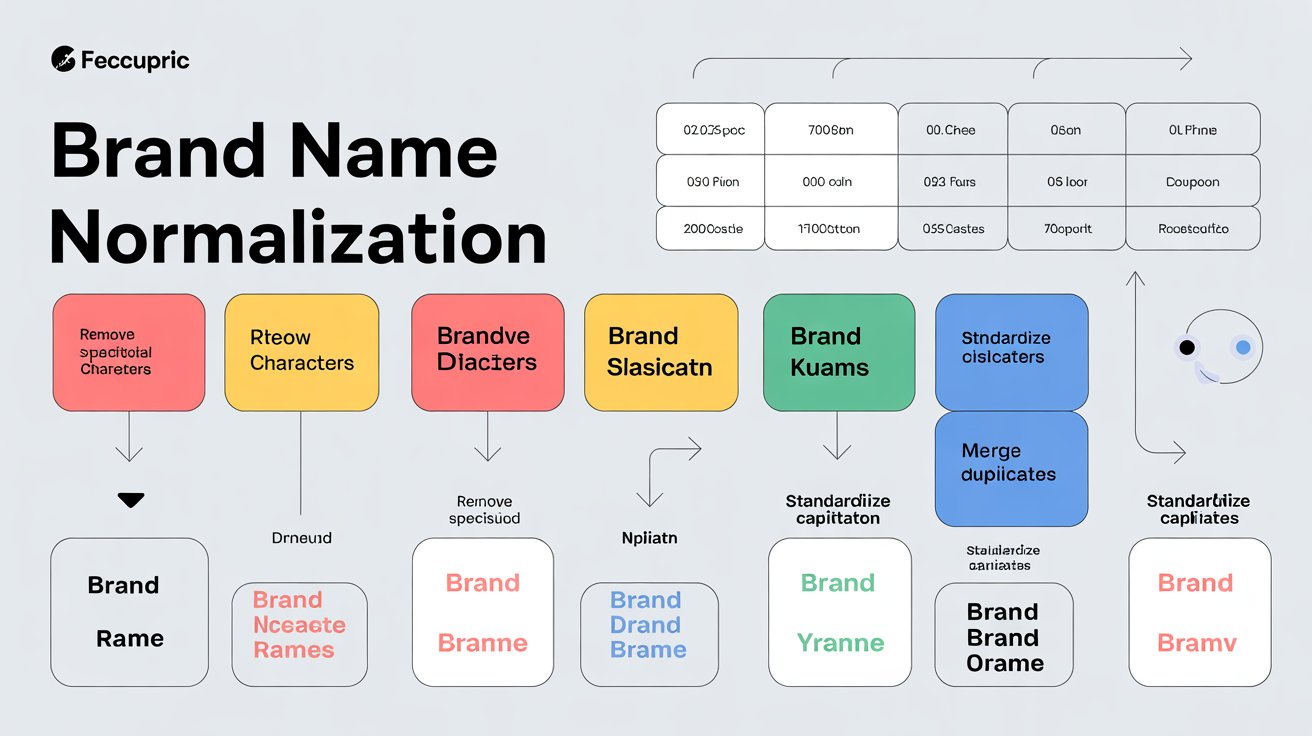
6. Remove Duplicate Variations
Map different versions of the same brand to one standard name.
Example Table:
| Variations | Normalized Name |
|---|---|
| nike, NIKE, Nike Inc. | Nike |
| apple, Apple Inc. | Apple |
| SAMSUNG, samsung | Samsung |
7. Maintain Official Brand Style
Some brands have unique stylization that must be preserved.
- iPhone (not Iphone)
- eBay (not Ebay)
- YouTube (not Youtube)
8. Language and Localization Handling
For global brands, ensure consistency across languages.
- “Coca-Cola” should remain unchanged globally
- Avoid translating brand names unless officially localized
Steps to Implement Brand Name Normalization
Step 1: Create a Master Brand List
Maintain a database of approved brand names.
Step 2: Define Rules
Set clear normalization rules like capitalization, suffix removal, and formatting.
Step 3: Automate the Process
Use scripts or tools to clean and standardize brand names automatically.
Step 4: Validate and Monitor
Regularly audit your data to ensure consistency.
Common Challenges
- Handling brands with special characters
- Dealing with user-generated content
- Maintaining consistency across multiple platforms
- Updating rules as brands evolve
Best Practices
- Always refer to the official brand website
- Keep a centralized brand dictionary
- Use automation tools for large datasets
- Regularly update normalization rules
Final Thoughts
Brand name normalization rules are essential for maintaining consistency, improving SEO, and ensuring accurate data management. By applying clear rules and best practices, businesses can create a cleaner, more professional digital presence.